


Sending money from Spain to Russia in 2026 is possible, but the usual European methods don't always work. According to INE, 110,665 Russian citizens were living in Spain as of 1 January 2025. For many of them, transfers mean regular support for family, personal expenses or larger payments.
Within Spain and the EU, people are used to SEPA, instant bank transfers and Bizum, but the Russian corridor works differently.
If you are looking for how to send money from Spain to Russia, it is worth comparing an available bank transfer, crypto/P2P and specialized payment services. One option is SendNOW: you arrange the euro-to-ruble transfer online, and the recipient gets the money straight onto a Russian bank card, including MIR. Before paying, you can see the exchange rate applied, the SendNOW fee and the amount in rubles the recipient should receive.
What to know about sending money from Spain to Russia
Spain is part of the eurozone and SEPA, so euro transfers within Europe are fairly straightforward. According to Banco de España, a standard SEPA transfer arrives no later than the next business day, while an instant one arrives within seconds.
But Russia is not part of SEPA. So the familiar "enter an IBAN and send euros" approach doesn't work automatically here. Whether you can send money from Spain to Russia depends on the recipient's Russian bank, the parties in the payment chain and the restrictions currently in force.
Spain also has a feature of its own: Bizum. The service lets you send instant international payments by phone number between Spain and a number of other European countries. Russia is not among its destinations.
So a transfer from Spain to Russia is no longer an ordinary European payment, but a separate financial operation for which you need to choose a suitable route.
Bank transfer from Spain to Russia
A direct bank transfer is theoretically possible in some cases, but it depends heavily on the Russian bank, the correspondent banks and the compliance checks of every party in the chain.
If you are figuring out how to send money to Russia from Spain, a bank transfer looks like the most obvious option. But once you go outside SEPA, the process gets more complicated.
Banco de España explains that international banking may involve a correspondent bank, which means an extra transfer fee is possible. Transfer times for cross-border payments outside SEPA may also differ.
In addition, EU financial restrictions apply. Since the 21st package of restrictive measures was adopted in July 2026, transaction bans extend to more than 100 Russian banks. That is why you need to check whether a direct transfer is possible for the specific recipient bank and every party in the payment chain.
Other ways to send money from Spain to Russia
Sending money from Spain to Russia with cryptocurrency
If you already know how to make a money transfer from Spain to Russia via crypto, well done, and you probably won't learn anything new from the next couple of paragraphs. If you don't, be sure to keep reading.
The option works like this: you buy a crypto asset with euros, transfer it, and then exchange it for rubles on a crypto exchange. You have to do more of the work yourself here: choosing a platform, exchanging currencies, and checking the counterparty and the recipient's details.
For someone figuring out for the first time how to send money from Spain to Russia in cryptocurrency, this kind of currency transfer can turn out to be harder than an ordinary online transfer. EU restrictions also apply to some crypto services, and the CNMV maintains a public list of unauthorized platforms. With P2P, the sender has to vet the platform and the counterparty personally.
SendNOW international money transfer service
SendNOW offers a more direct route: you arrange the online money transfer on the website or in the app, and the rubles arrive on a Russian bank card, including MIR. The service is built for international transfers and runs 24/7; according to SendNOW, 95% of transfers are processed within a minute. Cards from all Russian banks are supported, including sanctioned ones. Visa, Mastercard, Apple Pay, Google Pay and bank transfer may be available for payment. SendNOW reports that more than 200,000 people use the app every day; the service covers 190+ destinations, and sending is available in more than 20 currencies. In the Spanish App Store, the app was rated 4.2 out of 5 at the time of checking in September 2026.
If you need to understand how to send money from Spain to Russia to a card, there is no need to build a banking chain yourself or buy cryptocurrency here. Before you pay, you can see the euro-to-ruble rate, the fee and the amount the recipient will get.
Sending money from Spain to Russia with SendNOW
For those looking for how to send money from Spain to Russia right now, SendNOW offers a fully online route with no trip to a bank or a currency exchange office.
- Create a SendNOW account. You can sign up with email, Google or Apple ID. Then fill in your personal details in your profile: first and last name, phone number, country of residence and date of birth.

Registration takes about a minute. Your first transfer can usually be arranged online in about five minutes, including the required verification. SendNOW is available 24/7 on the website and in the apps.
- Enter the transfer details. Select EUR as the sending currency, enter the amount and select RUB as the receiving currency. The rate, the fee and the final amount in rubles will appear on the screen.
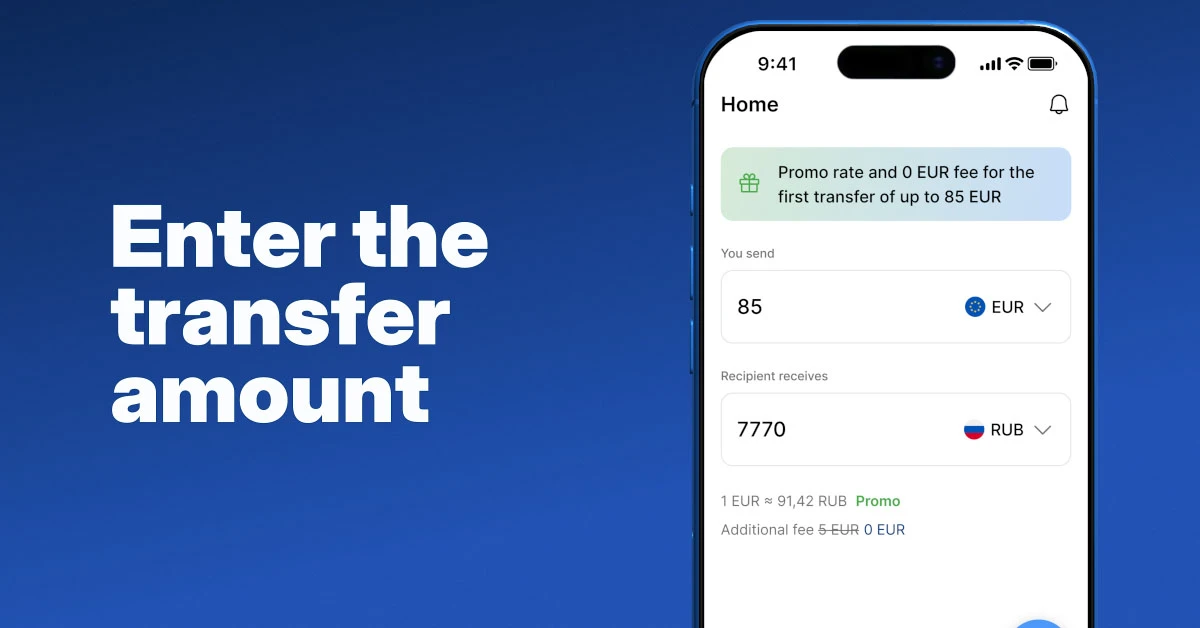
According to the current calculator, a first transfer of up to 87 EUR gets a promo rate and a zero SendNOW fee. For transfers of 175 EUR and above, the SendNOW fee is also 0%, including on repeat transfers. The improved rate for large amounts currently starts from 2,198 EUR. The terms are shown in the calculator before you pay.
- Add the recipient. If you are looking for how to send money from Spain to Russia to a card, you will need the recipient's name, phone number and Russian bank card number.
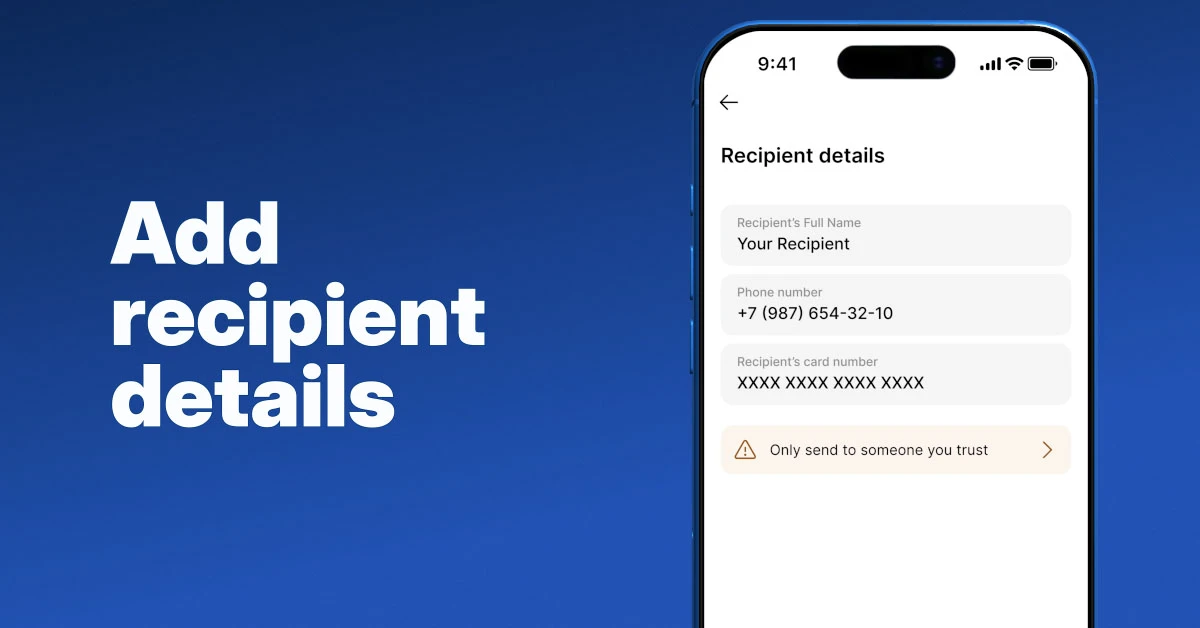
SendNOW supports cards from all Russian banks, including MIR. The recipient doesn't need to register, open a foreign account, provide an IBAN or SWIFT code, or take any action to receive the money: the rubles arrive directly on their card. - Choose a payment method. Depending on the transfer parameters, customers in Spain may be able to use Visa, Mastercard, Apple Pay, Google Pay, SEPA bank transfer and Open Banking. The exact set of methods depends on the amount, the currency and the available payment partner.
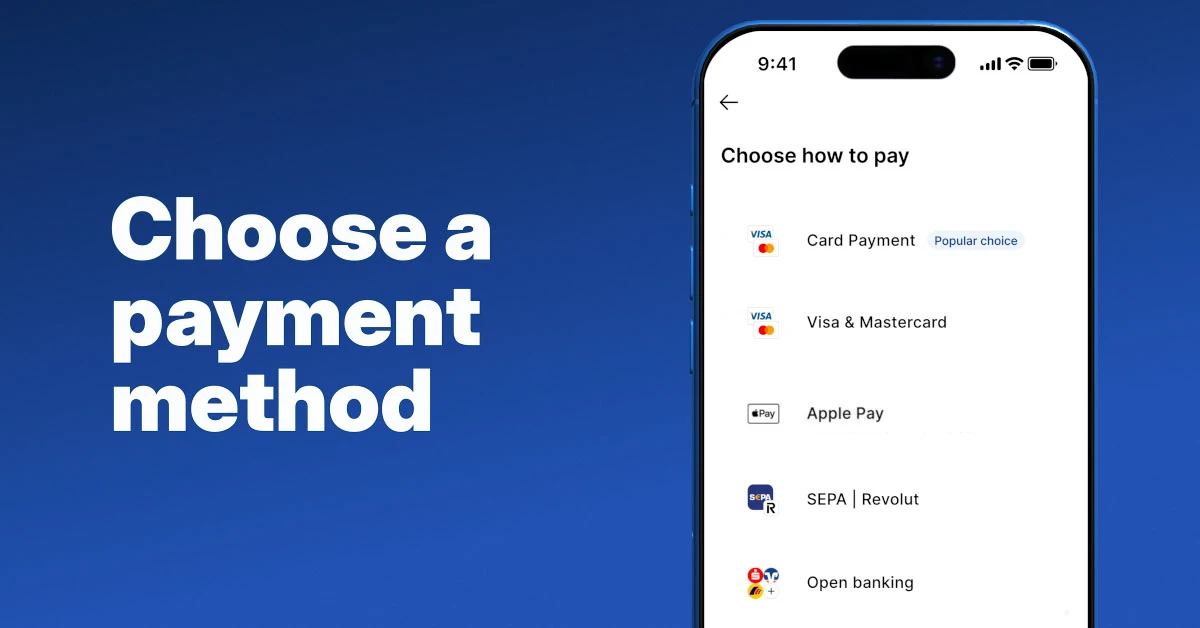
If a separate fee applies to the chosen payment method, it is shown in the interface before you confirm the transaction. All the available options are inside SendNOW, so you don't have to look separately for an exchange office, a crypto platform or an intermediary on Telegram. - Confirm the payment and track the transfer. Once you have worked out how to send money from Spain to Russia, all that is left is to check the terms and confirm your chosen payment method.
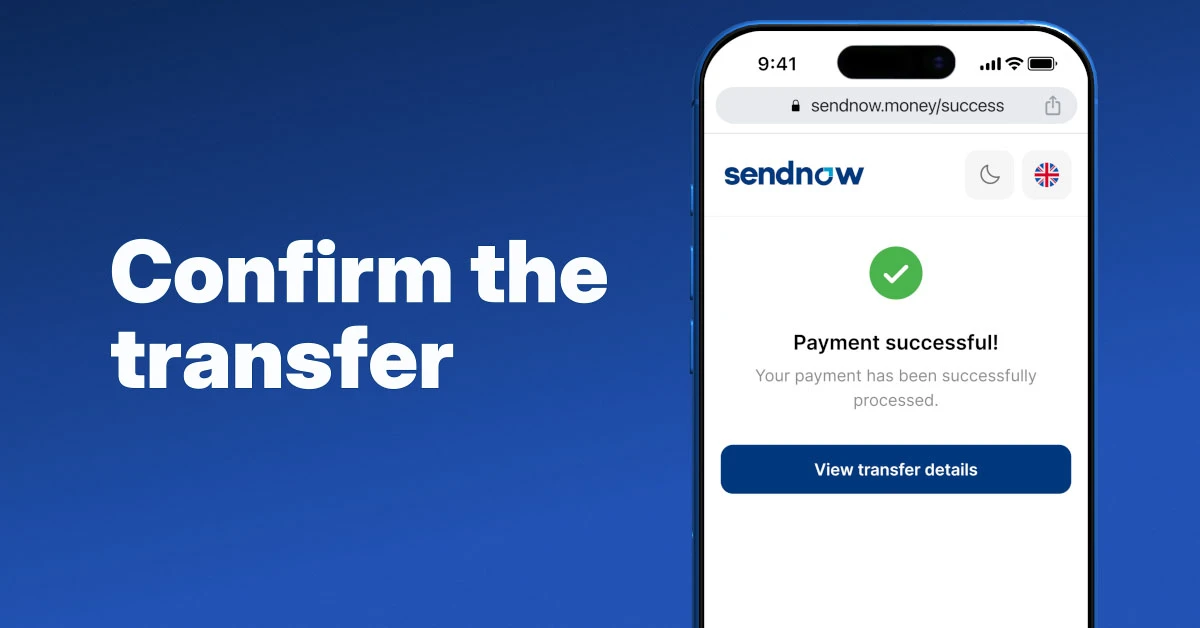
The payment provider may ask for identity verification: this usually takes an ID document and a short liveness check. After you pay, the transfer status is available in SendNOW; according to the service, 95% of transfers are processed within a minute. Repeat online money transfers take fewer steps, because some of your details are already saved.
Comparing the main ways to send money from Spain to Russia
| Method | How the transfer works | What to consider |
|---|---|---|
| SendNOW | EUR → RUB straight to a MIR card from any Russian bank | Online 24/7, about a minute, terms shown before payment |
| Bank transfer | Previously EUR → banks/correspondents → Russia. | practically impossible to complete a transfer |
| Account in a third country | Spain → foreign account → Russia | Slow, expensive, several banks and conversions |
| Crypto/P2P | EUR → crypto/P2P → RUB | Risk of losing funds, fraud and bank compliance problems |
If you are deciding what is the most cost-effective way to send money from Spain to Russia, compare the final amount in rubles, not just the size of a single fee.
Where extra costs come from
Suppose the sender wants to transfer 1,000 EUR. With a classic international bank route, costs can arise at several stages:
• the Spanish bank's fee;
• a possible correspondent bank fee;
• losses when converting EUR to RUB;
• possible charges from the receiving bank.
So when deciding how to make a money transfer from Spain to Russia with minimal losses, it is easier to count on the principle: "1,000 EUR in, how many RUB does the recipient get."
This lets you compare different ways to send money using a single metric. It is especially useful for international transfers, where a single small fee tells you nothing about the total cost of the operation.
With SendNOW, the calculation is shown before you confirm the payment: the sender sees the rate, the fee and the amount in rubles in advance.
What to check before sending
Whichever method you choose, a safe money transfer starts with checking the terms. Before the transaction, it is worth doing the following:
- check the recipient's name and details;
- look at the final EUR/RUB rate;
- find out the full cost of the transaction;
- make sure the chosen service works with the right Russian bank;
- check the final amount to be received;
- use the service's official website or app.
This is especially important if you are working out how to send money to Russia from Spain for the first time and comparing international financial services.
What to choose: summing up
When you need to send funds to Russia from Spain, SendNOW offers the most direct option: the sender pays in euros online, and the recipient receives rubles directly on a Russian bank card. The bank route is heavily restricted, while cryptocurrency, P2P and transfers via third countries require more work on your part and add new risks or costs.
For those figuring out how to send money from Spain to Russia without buying cryptocurrency themselves, SendNOW lets you arrange a money transfer from Europe online and receive rubles directly on a Russian card.
Sources
- Instituto Nacional de Estadística (INE) — Censo Anual de Población 2025. Data on the number of Russian citizens living in Spain as of 1 January 2025.
- Banco de España — Transferencia SEPA. Rules and timeframes for standard and instant transfers in the SEPA area.
- Banco de España — Transferencia internacional. Correspondent banks, fees and timeframes for cross-border transfers outside SEPA.
- Bizum — Internacional. Current international transfer destinations for Bizum from Spain.
- European Commission — 21st package of sanctions against Russia, 23 July 2026. Current restrictions on the Russian banking sector and crypto services.
- CNMV — Advertencias de entidades no autorizadas. Public list of warnings about entities and platforms lacking the required authorization.
- SendNOW — official website. Transfer terms, speed, payment methods, sending countries and the current app rating.


