


The Netherlands has one of Europe’s most digital payment cultures. Contactless cards, phones, payment requests and online banking are routine, and Dutch consumers are among the euro area’s heaviest users of digital payments. That makes the Russia corridor feel especially jarring: a payment that would be effortless inside Europe becomes a specialist transaction the moment the recipient is in Russia.
De Nederlandsche Bank notes that Dutch consumers use digital payment methods more than consumers in any other euro-area country at the point of sale; online, iDEAL is part of everyday payment behaviour, while payment-request apps such as Tikkie have made person-to-person payments almost frictionless.
For anyone trying to work out how to send money from the Netherlands to Russia, the important distinction is no longer between a slightly faster and a slightly cheaper provider. It is between routes that still work and routes that have disappeared. A normal Netherlands to Russia money transfer is no longer something most banks or mainstream remittance brands will handle, while SendNOW continues to provide a direct online route from EUR to a Russian bank card.
A common legal question is: is it legal to send money to Russia from the Netherlands? There is no blanket ban on all personal transfers. What matters is whether the recipient, bank, payment provider and purpose of the transaction comply with EU and Dutch sanctions. Dutch financial institutions are required to monitor transactions and apply sanctions where relevant.
The Dutch payment reflex meets a corridor that no longer behaves normally
Inside the Netherlands, digital payments are almost frictionless. That background matters because people expect an online money transfer to be quick, transparent and self-service.
Russia is the exception. A SEPA transfer does not reach a Russian card simply because the sender starts with euros, and international banking routes have narrowed sharply. By July 2026, EU transaction bans covered more than 100 Russian banks, alongside restrictions on financial messaging services.
That is why someone searching how to send money from the Netherlands to Russia now will usually discover that the familiar Dutch toolkit — SEPA, instant bank transfers and ordinary European international payment methods — does not solve the last mile into Russia.
Why the old remittance names have disappeared
The list is now long enough to change the market completely. Western Union suspended its Russian operations in March 2022. TransferGo says it stopped transfers to Russia within hours of the invasion. Wise restricted its Russian business in 2022 and still lists Russia among the countries where sending and receiving money is unsupported.
KoronaPay Europe remained in the European market longer, but its current site says new transfers are unavailable while the European entity withdraws its authorisation.
The services that stayed in Europe longer have not restored this corridor either. For anyone researching how to send money from the Netherlands to Russia, this is no longer a straightforward comparison between legacy remittance brands. Profee’s current supported-country list does not include Russia, while Paysend requires customers to check current destination availability through its live transfer flow and does not currently present Russia as a standard destination for consumer transfers from the Netherlands.
For anyone comparing payment service providers, this is a very different market from the one that existed before 2022.
For anyone trying to understand how to transfer money from the Netherlands to Russia in 2026, the problem is no longer finding ten similar apps and comparing a fee table. It is finding a regulated service that actually supports the destination.
What still works
There are four routes worth discussing, but they are not equally practical.
| Route | What it involves | Main drawback |
|---|---|---|
| SendNOW | EUR payment online, RUB delivered directly to a Russian bank card | Payment-method availability can vary by transaction |
| Bank / SWIFT | Dutch bank → possible correspondent banks → Russian bank | For ordinary retail users, largely unavailable or impractical |
| Crypto / P2P | Buy crypto, move it, then arrange RUB payout | More technical steps, counterparty risk and compliance risk |
| Telegram intermediaries | Send money to a private person and rely on an informal payout in Russia | No regulated consumer protection and a high fraud risk |
If the question is how to wire money to Russia, the honest answer is that a conventional bank wire is rarely a realistic consumer route from the Netherlands today. Even where a transaction is not prohibited in principle, every financial institution involved still has to satisfy sanctions and compliance requirements. DNB explicitly notes that transfers involving sanctioned Russian banks cannot be executed and that Dutch financial institutions must screen Russia-related transactions. dnb.nl
For people asking how to send money to Russia, crypto can look like the obvious workaround. It can work technically, but the flow is no longer simple. The sender may need an exchange, a wallet, a second conversion and a P2P counterparty. Dutch regulator AFM describes crypto as complex and vulnerable to fraud, manipulation and misleading platforms, while the EU’s July 2026 package added further restrictions on crypto platforms and services linked to sanctions circumvention.
There is another issue on the Russian side. Russian banks actively monitor suspicious P2P activity, and the Bank of Russia expanded its fraud-detection criteria from six to twelve from January 2026. Banks can restrict cards or online banking when transaction patterns or recipient details trigger fraud controls. That does not mean every crypto-related transfer will be blocked, but it does mean an informal P2P payout can create a problem for the recipient that a normal regulated transfer does not.
Telegram sits at the other end of the spectrum. The convenience is informal; so is the protection. There is no meaningful transfer tracking, no regulated complaints process and often no clear legal entity behind the person taking the money. For secure international payments, that is the opposite of what most Dutch customers are used to.
Why SendNOW fits the way people in the Netherlands already pay
SendNOW is designed as a consumer payment flow rather than a workaround. The sender creates the transfer online, pays in EUR using an available method and the recipient receives RUB directly on a card issued by a Russian bank, including MIR cards and cards issued by sanctioned banks.
That is the core answer for anyone researching how to send money from the Netherlands to Russia without building a chain of banks, exchanges and private intermediaries.
The flow is also much closer to what a Dutch customer already recognises. Depending on the transaction, payment methods can include Visa, Mastercard, Apple Pay, Google Pay, SEPA and Open Banking. The recipient does not need to create a SendNOW account, provide IBAN or SWIFT details, or take any action before receiving the money. SendNOW’s public product information also confirms web, iOS and Android access, online tracking and multiple card and bank-payment methods.
SendNOW shows the applicable EUR exchange rate, its service fee and the expected rouble payout before payment. That makes currency conversion visible before the sender commits, rather than leaving the final result to several separate intermediaries.
For someone asking how to send money to someone in Russia, this distinction matters more than it sounds. A regular family payment should not require the recipient to understand crypto, meet a P2P counterparty or wait for a chain of banks to clear.
From euros in the Netherlands to roubles on a Russian card
Step 1. Create the account
Registration takes about a minute. Use an email address, Google Account or Apple ID on the SendNOW website or in the iOS or Android app. The full first-transfer flow can typically be completed online in around five minutes, subject to any verification required.

Step 2. Set the amount
Choose EUR as the sending currency and Russia as the destination. SendNOW calculates the EUR to RUB result immediately and shows the expected payout, service fee and promotional terms.
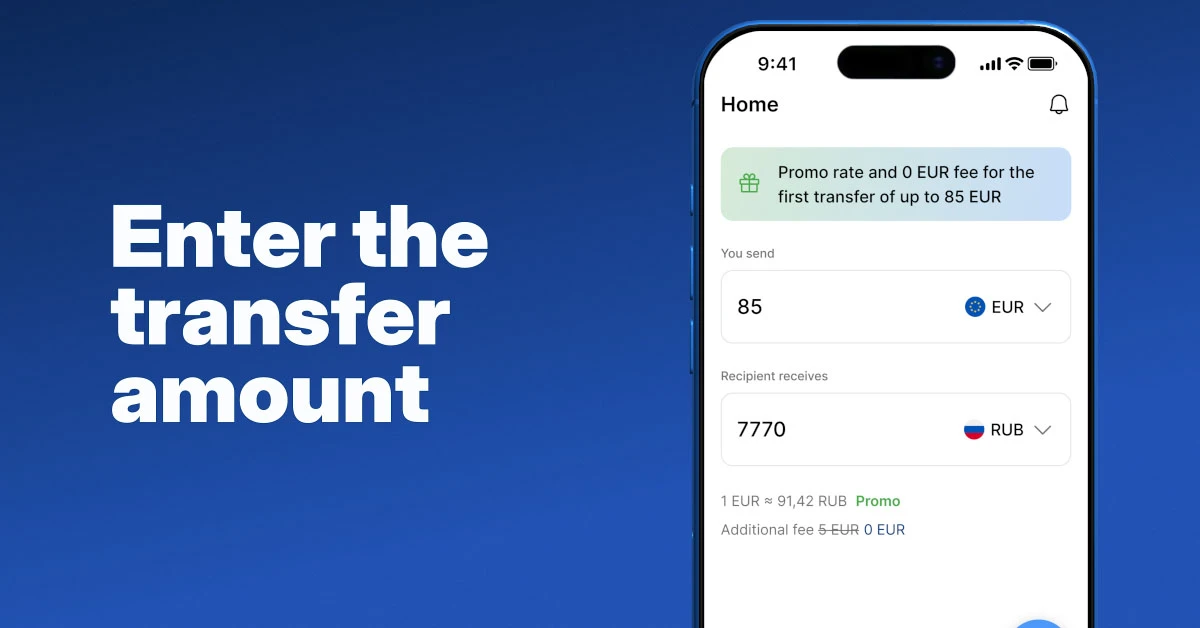
New customers receive a promotional rate and a 0% SendNOW service fee on their first transfer up to the equivalent of USD 100 — roughly €85 at late-September 2026 exchange rates. Transfers from the equivalent of USD 200, around €176, also have a 0% SendNOW service fee, including repeat transfers. From the equivalent of USD 2,500, roughly €2,195, an improved rate applies automatically. The EUR equivalents are approximate because the product thresholds are defined in USD-equivalent terms.
For anyone checking how to send money from the Netherlands to Russia now, those thresholds matter because the same service can cover both a small recurring international remittance and a much larger family payment.
Step 3. Add the recipient
You normally need the recipient’s name, phone number and Russian card number. No IBAN or SWIFT code is required for a SendNOW card payout, and there is no need to collect full recipient bank details.
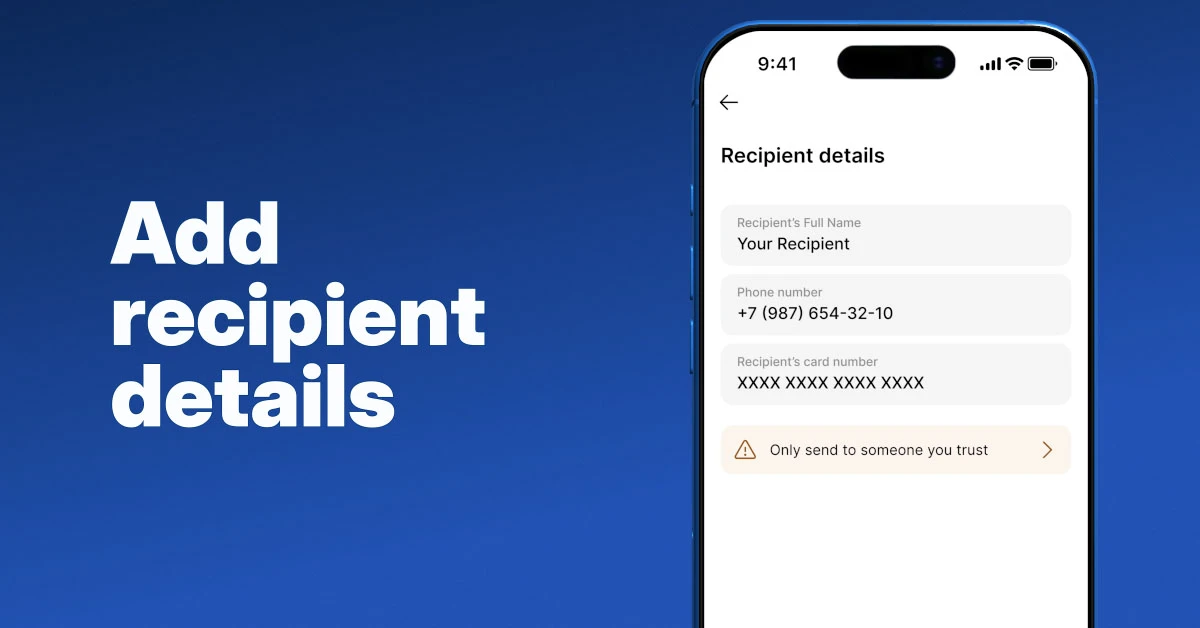
A common practical question is: how long does it take to transfer money from the Netherlands to Russia? With SendNOW, the average delivery time to Russia is around one minute, although additional checks or some payment methods can take longer.
Step 4. Choose how to pay
Available methods can include Visa, Mastercard, Apple Pay, Google Pay, SEPA and Open Banking. If a payment method carries an additional charge, it is shown before confirmation.
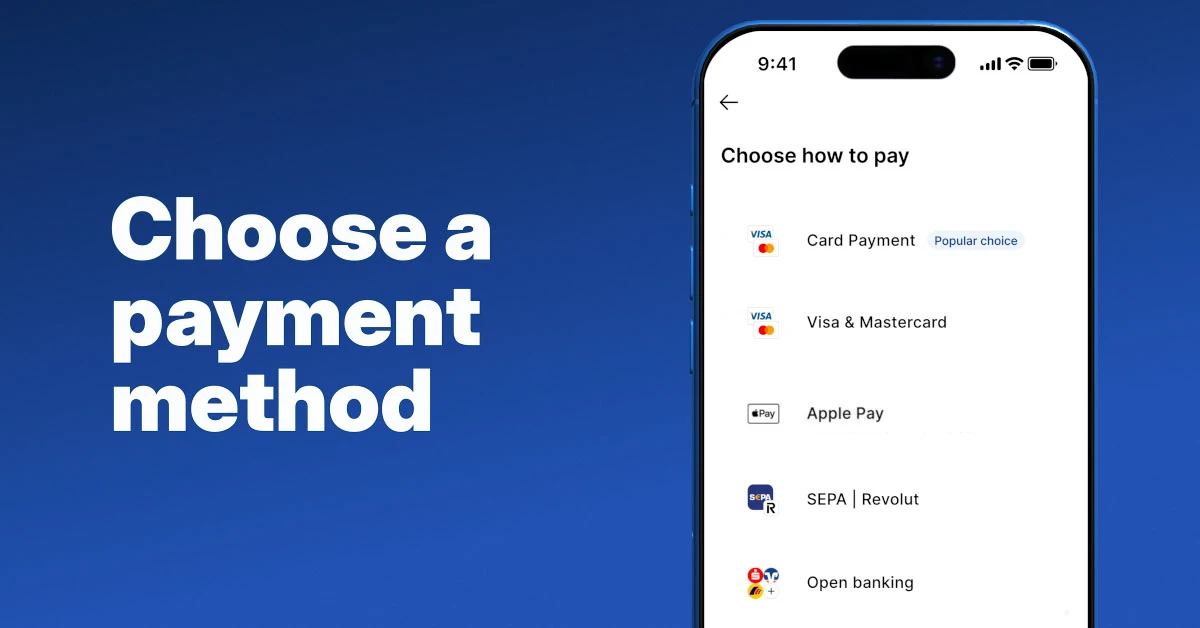
That keeps the money transfer to Russia inside one regulated flow rather than turning it into several separate international transactions.
Step 5. Confirm and track
Review the amount, fee and expected RUB payout, confirm the payment and follow the status in SendNOW. Repeat transfers are quicker because saved recipient details remove much of the setup.
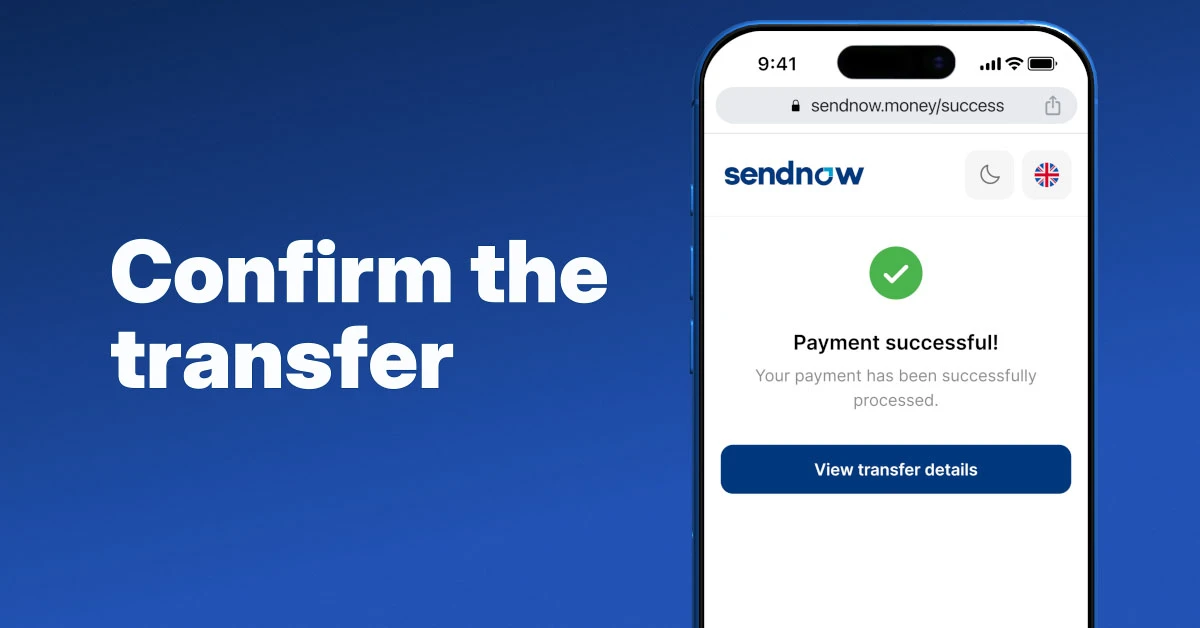
That also answers a common question: how can you send money to Russia from the Netherlands without opening another bank account or arranging a private exchange?
Fees, exchange rate and larger transfers
For any international money transfer, the visible fee is only one part of the cost. The amount the recipient receives after the currency exchange matters just as much.
SendNOW makes that comparison straightforward. The first qualifying transfer up to roughly €85 carries a 0% SendNOW service fee and promotional rate. Transfers from about €176 also have a 0% SendNOW service fee, while the improved-rate threshold begins at roughly €2,195.
A EUR transfer to Russia through a third-country bank chain can involve multiple conversion points and intermediary charges. An overseas money transfer built around crypto can involve an exchange fee, a spread and a second conversion into RUB. Comparing the expected payout before payment is therefore more useful than comparing headline fees alone.
For anyone asking how to transfer money from the Netherlands to Russia cheaply, the right comparison is the complete outcome: how much EUR leaves the sender, how much RUB reaches the recipient, how long it takes and who is responsible if something goes wrong.
Why the difference matters for recurring transfers
The Dutch market is built around payment convenience. DNB data show just how normal digital payments have become, including person-to-person payments through payment requests and bank transfers. In 2024, 64% of Dutch P2P payments were electronic, and DNB specifically notes the growing use of payment-request apps such as Tikkie.
Russia breaks that expectation because most of the familiar infrastructure stops before the recipient.
SendNOW restores something closer to the normal consumer experience: create the payment yourself, see the terms before confirming, send to a Russian bank card and use transfer tracking in the same service.
That makes it particularly useful for repeat family support, education or medical costs, property expenses and larger personal transfers. For anyone working out how to send money to someone in Russia every month, repeatability is often more important than finding a route that works once.
What about legality?
People still ask is it legal to send money to Russia from the Netherlands because the sanctions framework changes over time. The sanctions are still in force, but they do not amount to a blanket prohibition on every private remittance. The particular recipient, bank, payment provider and purpose of the transaction still matter.
Dutch financial institutions are required to monitor transactions and apply sanctions where relevant. For unusually large, business-related or otherwise complex payments, specialist legal or compliance advice may be appropriate.
For ordinary eligible consumer transfers, SendNOW keeps the compliance and payment process inside a regulated service rather than leaving the sender to assemble the route independently.
What should you choose in 2026?
The market is no longer symmetrical. Banks are not a practical alternative for most retail customers. Wise, Western Union and TransferGo stopped serving the Russian corridor years ago; KoronaPay Europe now accepts no new transfers; Profee’s current destination list excludes Russia, and Paysend does not offer Russia as a normal Netherlands-to-Russia consumer destination in its current public flow. Wise
Crypto remains technically possible but requires more knowledge and introduces additional compliance and counterparty risk. Telegram is the least protected option.
For anyone comparing money transfer options, SendNOW is the strongest all-round consumer route because it combines online payment in EUR, direct payout to Russian bank cards, upfront pricing, large transfer limits and support for repeat transfers in one service.
If you are deciding how to send money from the Netherlands to Russia, the practical answer is to use a route designed for this corridor rather than trying to rebuild a payment chain from tools that no longer connect end to end.
And if the question is simply how to send money to Russia, the same principle applies: look at whether the transfer can actually be completed, what the recipient receives and what protection you have if something goes wrong.
For customers still searching how to transfer money from the Netherlands to Russia, SendNOW offers a direct, regulated route from EUR to a Russian bank card without requiring crypto, a third-country bank account or an informal intermediary.
For anyone asking how to send money from the Netherlands to Russia now, the real advantage is having a repeatable answer rather than a one-off workaround.
Sources
- De Nederlandsche Bank — Dutch payment behaviour — Dutch consumers’ unusually high use of digital payments.
- De Nederlandsche Bank — P2P and digital payments — electronic P2P payments and payment-request apps such as Tikkie.
- De Nederlandsche Bank — Financial sanctions — sanctions screening and transaction-monitoring obligations for Dutch financial institutions.
- European Commission — 21st sanctions package against Russia — transaction bans affecting more than 100 Russian banks and additional crypto restrictions, July 2026.
- AFM — Risks of crypto — fraud, manipulation and complexity risks.
- Bank of Russia — card and transfer restrictions — 2026 fraud indicators and restrictions on suspicious transfers.
- Western Union — Russia and Belarus suspension — suspension effective March 2022.
- Wise Help Centre — unsupported countries — Russia remains unsupported.
- KoronaPay Europe — new transfers unavailable.
- Profee — supported countries and currencies — current destination list does not include Russia.
- Paysend — checking destination availability — current corridor availability is determined through the live destination list.
- SendNOW — product flow, payment methods, limits, pricing and Russia support.


