


Italy has a sizeable Russian-citizen community and a wider Russian-speaking population with family and financial ties to Russia. ISTAT-based figures show 43,119 Russian citizens resident in Italy at the start of 2025, including more than 10,000 in Lombardy. That does not count naturalised Italians or Russian speakers with other citizenships, so the group of people who may need to support parents, partners or relatives in Russia is wider than the passport data suggests.
For professionals in Milan, Rome, Turin or Bologna, IT workers, entrepreneurs and long-term residents, the problem is usually practical: how to send money from Italy to Russia without turning a family payment into a chain of banks, exchanges and intermediaries. There is also a legal question: is it legal to send money to Russia from an EU country? In general, there is no blanket ban on private transfers, but the people, banks and payment services involved must comply with EU sanctions.
For anyone asking how to send money to Russia now, the market is much narrower than it once was. Wise lists Russia as unsupported, while the European Commission maintains detailed guidance on payment services involving Russia. For an international remittance, the useful question is not simply “what is the fee?”, but whether the route works from Italy, what the recipient receives and how clearly the cost is shown before payment.
Why an Italy to Russia transfer is different
Italy is in the euro area and SEPA, so European bank payments are normally straightforward. Russia sits outside that system. That makes Russia one of the more complicated cross-border payments corridors for consumers in the EU. A bank transfer from Italy to Russia may still be possible in some cases, but it depends on the receiving bank, correspondent banks, the purpose of the payment and sanctions screening. The European Commission’s March 2026 guidance confirms that specific payment and e-money services are restricted for certain Russian nationals and residents; it is not a simple prohibition on every personal remittance.
An Italian bank may accept the foreign payment while a correspondent institution later refuses it. So learning how to wire money to Russia is no longer the same as entering an IBAN and waiting a couple of working days.
Mainstream international transfer providers have also pulled back. Wise says customers cannot send or receive money to or from Russia through its service. For Italy-based users with family or financial commitments in Russia, the issue is therefore not demand but access: the number of practical consumer routes has shrunk sharply.
What are the realistic options?
If you are comparing how to transfer money to Russia, the main money transfer options are a bank, a third-country route, crypto/P2P and a regulated online service.
| Method | Availability from Italy | Complexity | Recipient experience | Main thing to check |
|---|---|---|---|---|
| Italian bank / SWIFT | Effectively unavailable for most retail transfers | High | Bank account required | Most Russian banks are restricted or unreachable through normal EU correspondent routes |
| Third-country bank route | Possible for some users | Very high | Usually bank-account based | Very slow and expensive: often requires multiple transfers, several banks, additional fees, currency conversion and repeated compliance checks |
| Crypto and P2P | Technically available | High | Often requires conversion or a counterparty | High risk of loss, fraud and bank-account restrictions if the payment is linked to suspicious crypto/P2P activity |
| SendNOW | Online from Italy | Low | Direct to a Russian bank card, including MIR | Exchange rate, fee and payout before payment |
A third-country bank route can work in some cases, but it is usually the slowest and most expensive option: the money may pass through several banks, incur multiple fees and currency conversions, and face compliance checks at more than one stage.
Crypto and P2P routes also carry a banking risk that is easy to overlook. Russian banks apply strict fraud and compliance controls to unusual card-to-card payments, and transactions linked to suspicious or illegal crypto/P2P schemes can lead to transfers being stopped, cards or online banking being restricted, and accounts being reviewed. The Bank of Russia has specifically warned that dealings with illegal crypto platforms can result in account blocking and other problems with access to banking services.
They also add extra steps: buying an asset, transferring it, selling it for roubles and choosing a counterparty. Regulated online transfer services can remove several of those intermediate steps by handling payment and delivery within one platform.
The comparison that matters is how many steps are involved, who handles the money and how much the recipient ultimately receives.
A practical route: how to send money from Italy to Russia through SendNOW
For someone who wants a regulated, fully online route, SendNOW removes much of the complexity of a traditional correspondent-bank transfer. SendNOW is the only full-service consumer money transfer service currently offering direct transfers from Italy to Russian bank cards, including MIR cards and cards issued by sanctioned banks.
A common question is: can you send money to Russia from Italy in 2026? With SendNOW, the answer is yes. The sender pays in euros; the recipient receives roubles directly on the card and does not need a foreign account, IBAN, SWIFT code or SendNOW account. For an overseas money transfer to a parent, partner or other family member in Russia, this keeps the process simple for the recipient: they do not need to register or take any action to receive the money.
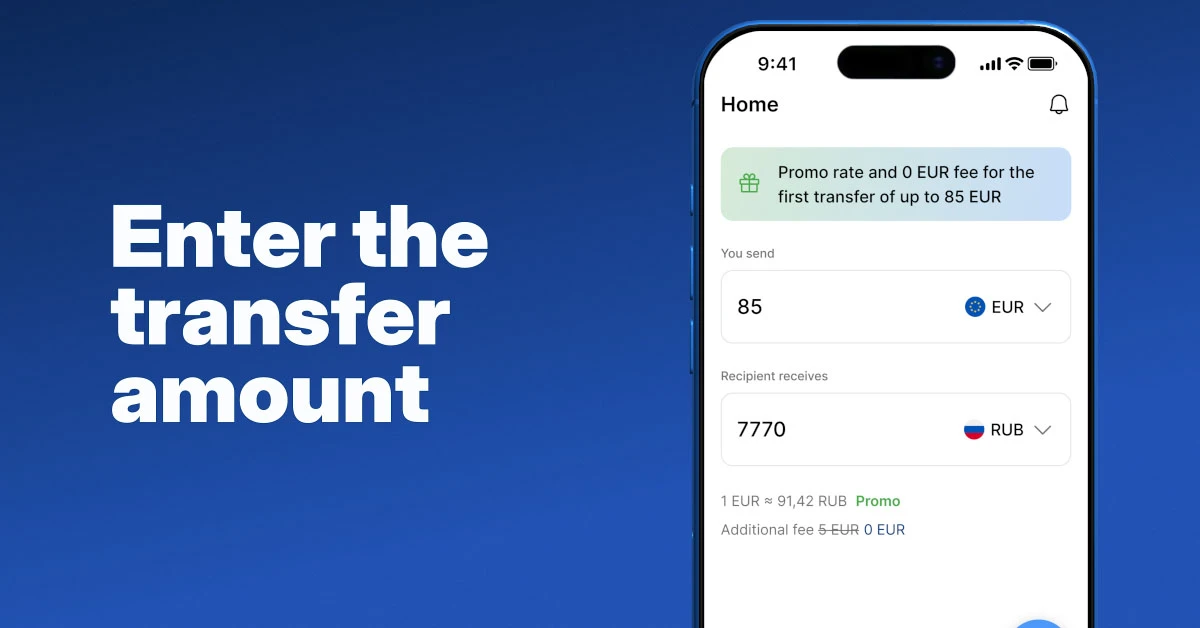
New customers get a promotional exchange rate and 0% SendNOW service fee on the first transfer up to €85. Transfers of €180 or more also carry a 0% SendNOW service fee, including repeat transfers. From €2,300, an improved exchange rate applies automatically. You can send up to around €43,800 in a single transfer, making SendNOW suitable for larger payments as well as regular family transfers.
For people asking how to send money to someone in Russia, direct card delivery removes most of the work from the recipient.
Step by step: how to send money from Italy to Russia with SendNOW
- Register with SendNOW. Open the website or the iOS or Android app. Create an account with an email address, Google Account or Apple ID. Registration takes about a minute. For someone researching how to send money from Italy to Russia, the whole first-transfer flow can typically be completed online in about five minutes, subject to any verification required.

- Choose EUR and enter the amount. For a euro-to-rouble transfer, select euros as the sending currency and Russia as the destination. SendNOW shows the expected rouble payout before payment, together with the applicable rate, SendNOW fee and promotional terms.
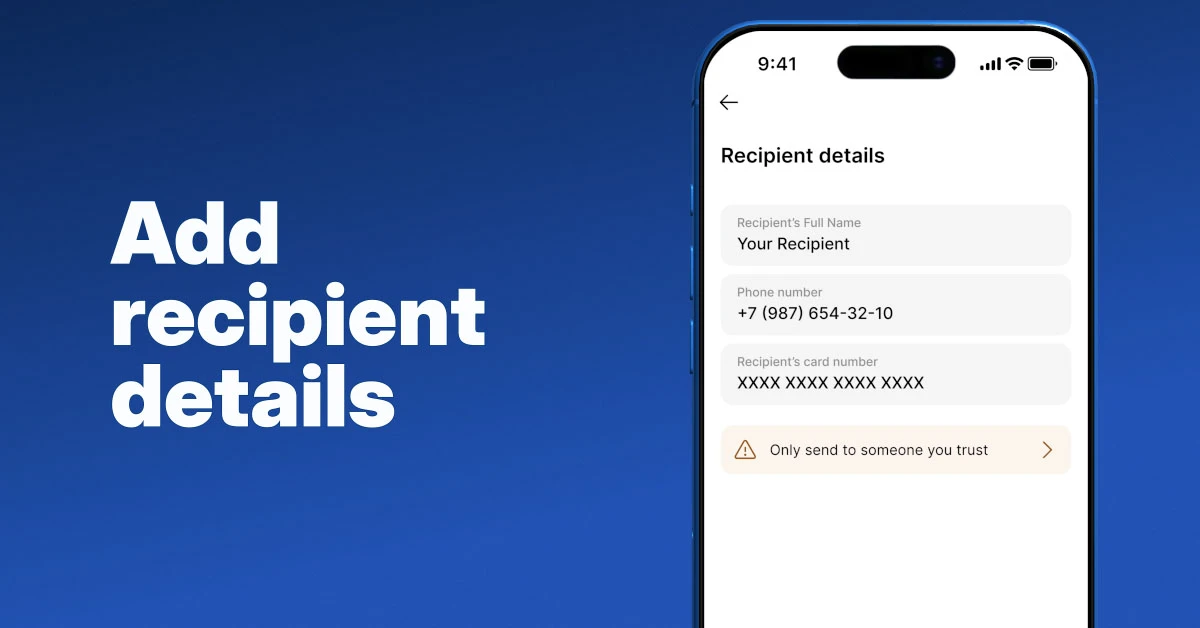
- Add the recipient. You normally need the recipient’s name, phone number and Russian bank card number. SendNOW supports cards issued by all Russian banks, including MIR cards. The recipient does not need to register, open a foreign account or take any action to accept the transfer: the roubles arrive directly on their bank card. For anyone asking how to transfer money to Russia without opening an account abroad, this keeps the process particularly simple. Check the card number and name carefully; incorrect recipient details can delay the transfer. Saved recipient details make repeat payments possible in a few taps.
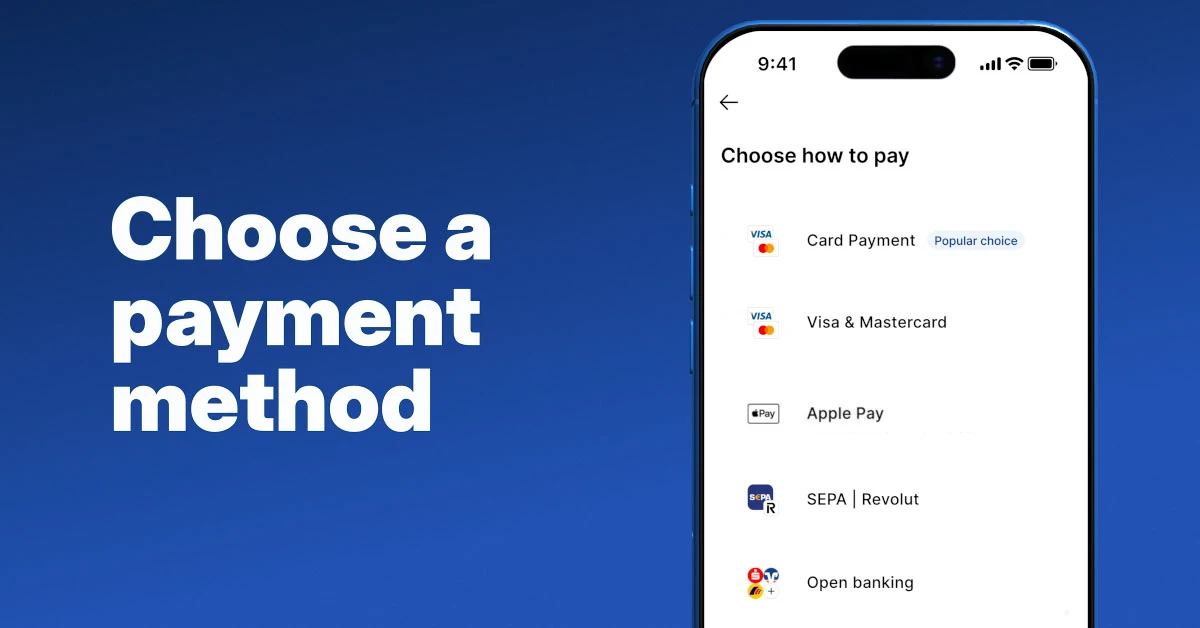
- Choose a payment method. Depending on the transaction, customers in Italy may be offered Visa, Mastercard, Apple Pay, Google Pay, a SEPA bank transfer, or Open Banking. These online payment solutions keep familiar European banking and digital payment services within one flow, without requiring a separate currency exchange, crypto platform or Telegram intermediary. A payment-method charge may apply on top of the SendNOW service fee and is shown before confirmation.
- Confirm and track the payment. Follow the prompts for the method you chose. Card payments normally require card details and confirmation; Apple Pay and Google Pay can be approved on the phone. SEPA and Open Banking follow their own bank-authentication flows. Transfer tracking is available in the SendNOW account.
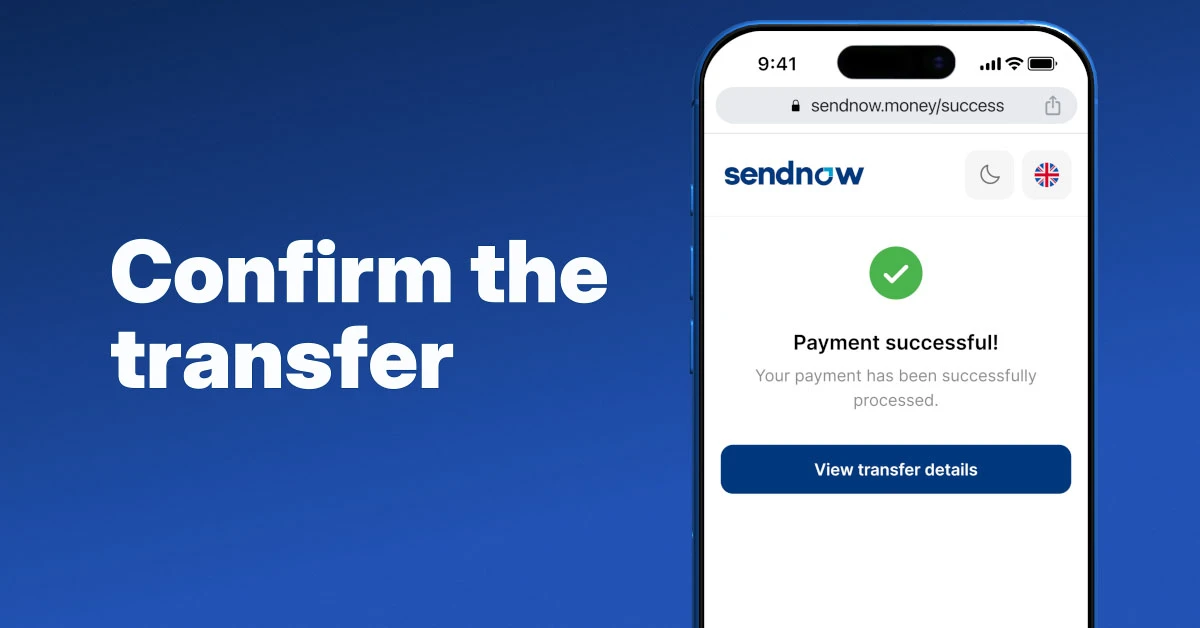
Average delivery from Italy to Russia is around one minute, although bank-funded transactions or additional checks can take longer. The transfer processing time therefore depends partly on the payment method and whether additional verification is required. For anyone asking how long does it take to transfer money to Russia, card-funded transfers are typically the quickest, while bank-funded payments may take longer.
Fees, speed and the amount received
Anyone researching how to send money to Russia now should compare the whole transaction. A 0% service fee can still be unattractive if the exchange rate is weak; equally, a good rate can be offset by a payment-method charge.
The main thresholds are:
- first transfer up to €85: promotional rate and 0% SendNOW service fee;
- €180 or more: 0% SendNOW service fee, including repeat transfers;
- €2,300 or more: improved exchange rate applied automatically.
The service is available 24/7 through web, iOS and Android. SendNOW states that more than 200,000 customers use it daily, with ratings of 4.4/5 on the App Store and 4.3/5 on Google Play. Its Italian App Store listing confirms Italy as a sending market, 24/7 availability and that 95% of transfers are processed within one minute.
A practical advantage is that the recipient amount is visible before payment rather than reconstructed afterwards from several fees and conversions.
Is it legal and safe?
The question is it legal to send money to Russia needs a careful answer. EU sanctions do not create a universal prohibition on every private payment. They do restrict particular banks, entities, services and transactions, and financial institutions remain responsible for sanctions screening. The European Commission maintains current guidance specifically on payment services involving Russia.
A regulated provider gives you an identifiable company, a compliance process, a transaction record and a support channel. A private Telegram intermediary may offer an attractive rate without the same recourse if something goes wrong.
If you are weighing how to send money to Russia, check:
- who handles the funds and under what regulatory framework;
- the amount the recipient is expected to receive after fees and conversion;
- whether the transaction has reliable transfer tracking and customer support.
SendNOW follows regulatory requirements for customer verification and the protection of personal and payment data.
When SendNOW makes sense
A bank can still be suitable if both institutions will process the payment and time is not critical. Crypto may suit an experienced user who already manages wallets and exchanges. But if your question is how to send money to someone in Russia — perhaps a parent, partner or close relative — simplicity usually matters more than assembling the route yourself.
SendNOW is particularly practical for recurring remittances, urgent payments and larger personal transfers. Register once, save the recipient details and repeat the payment from the app. For anyone searching how to send money from Italy to Russia for regular family payments, saved recipient details make repeat transfers particularly simple..
If you are still comparing how to transfer money to Russia, look at the expected payout, speed and number of steps rather than the advertised fee alone. For people asking how to send money to Russia now, the market remains constrained, but the transfer itself does not have to be complicated.
The practical question is simply: how to send money to Russia without adding unnecessary intermediaries? For many Italy-based users, a regulated service that accepts euros and delivers roubles directly to a Russian bank card is the shortest route.
Sources
- ISTAT population data — resident population by citizenship and country of birth
- Tuttitalia — Russians resident in Italy — ISTAT-derived Russian-citizen population and regional distribution, 1 January 2025
- European Commission — provision of payment services — EU sanctions guidance on payment services involving Russia, updated 13 March 2026
- Wise Help Centre — Where can I use Wise? — Russia listed among unsupported countries
- SendNOW — Italian App Store listing — Italy as a sending market, 24/7 availability and processing-speed information
- SendNOW — official product terms, pricing, limits and transfer flow
- Bank of Russia —warns individuals about risk of being lured into criminal schemes by crypto exchanges and online casinos


